Posições Políticas

"Obscene lies"
3 February 2014
Translated "Avante!" article by Jorge Cadima, Member of the PCP International Department
"Sharon, the bulldozer"
27 January 2014
Translated "Avante!" article by Angelo Alves, Member of the Political Committee and of the International Department
"Against fascism and war"
16 January 2014
Translated "Avante!" article by Albano Nunes, Member of the Secretariat of the CC
"Venezuela, year 15"
9 January 2014
Translated "Avante!" article by Luis Carapinha, Member of the PCP International Department
"April Revolution"
2 January 2014
Translated "Avante!" article by Pedro Guerreiro, Member of the Secretariat of the CC
"1914-2014"
26 December 2013
Translated "Avante!" article by Jorge Cadima, Member of the International Department
"Mandela"
19 December 2013
Translated "Avante!" article by Albano Nunes, Member of the Secretariat of the CC

On the meeting of the Central Committee of the PCP
18 December 2013
Press Conference, Jerónimo de Sousa, General Secretary, Lisbon
Monday, December 16, 2013
Statement of the PCP Central Committee of December 15th - 16th, 2013
16 December 2013
Having analysed the national situation, the worsening economic and social situation and the consequences that Portugal will suffer as a result of the 2014 State Budget adoption, it was reasserted that mass struggle is the key element in fighting the ongoing offensive. The Central Committee expressed solidarity with ongoing struggles, and appealed to workers, communities, and to all democrats and patriots to not give up in the face of the offensive and to fight for a patriotic and left-wing alternative.The Central Committee highlighted the dimension, scope and significance of the events held as part of Álvaro Cunhal's centennial, and adopted two resolutions: One on organisational party-strengthening, and another on the April Revolution's 40th anniversary celebration in 2014.
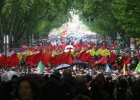
40th anniversary of the April Revolution - The values of April in Portugal's future
16 December 2013
In 2014, the Portuguese workers and people will celebrate 40 years of April 25, 1974 – the April Revolution.
1. The April Revolution is an historic achievement of the Portuguese people and an act of social and national emancipation, which represents one of the most important events in Portugal's history.